
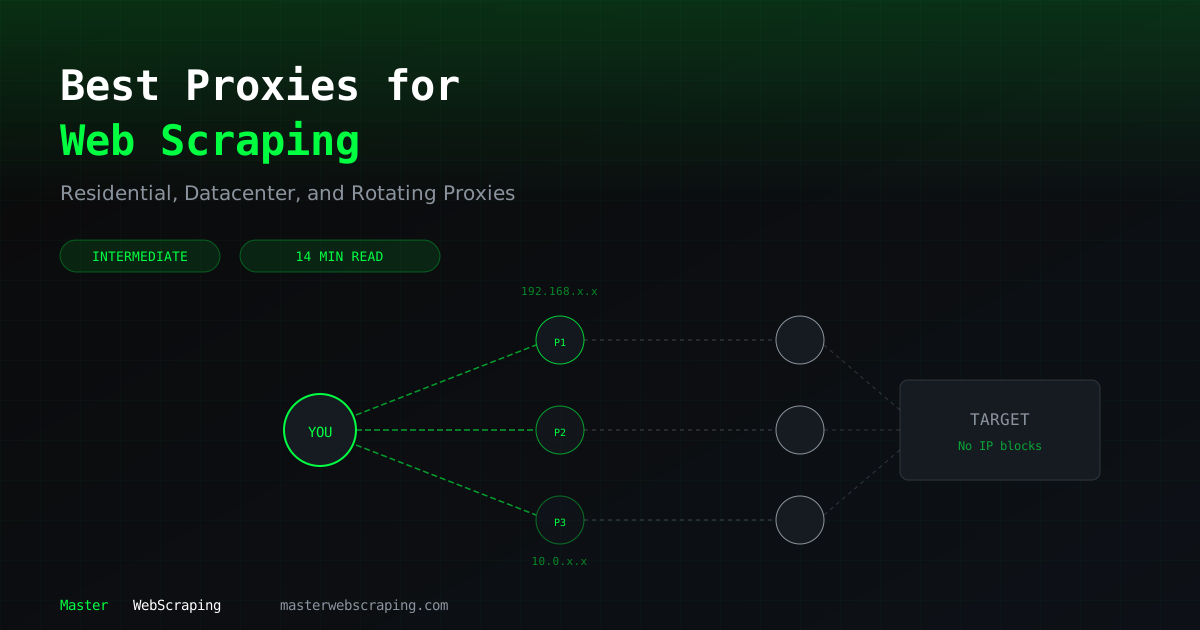
Best Proxies for Web Scraping in 2026: A Practical Guide
If you're scraping more than a few hundred pages, you'll eventually get blocked by IP. Proxies are the standard solution. But the proxy market is full of overpriced services and misleading marketing.
Here's a practical guide to choosing and using proxies for web scraping.
Why You Need Proxies
When you scrape from a single IP address, the target site sees hundreds or thousands of requests from the same source. That's not how real users behave, and anti-bot systems flag it immediately.
Proxies route your requests through different IP addresses. To the target site, each request appears to come from a different user.
Your server (1 IP) --> Proxy pool (1000 IPs) --> Target site
You need proxies when:
- •You're sending more than 100 requests per minute to one site
- •The site uses IP-based rate limiting
- •You've been blocked and need fresh IPs
- •You need to access geo-restricted content
Types of Proxies
Datacenter Proxies
IPs from cloud providers (AWS, Google Cloud, etc.). Cheap and fast, but easy for anti-bot systems to detect because they come from known datacenter IP ranges.
- •Cost: $0.50-2 per IP/month
- •Speed: Very fast (low latency)
- •Detection rate: High on protected sites
- •Best for: Sites with minimal anti-bot protection
Residential Proxies
IPs from real ISPs assigned to real homes. Much harder to detect because they look like normal users.
- •Cost: $5-15 per GB of traffic
- •Speed: Moderate (varies by provider)
- •Detection rate: Low
- •Best for: Sites with serious anti-bot protection (Cloudflare, DataDome)
Mobile Proxies
IPs from mobile carriers (4G/5G). The hardest to block because mobile carriers use shared IP pools — blocking one mobile IP could block thousands of real users.
- •Cost: $20-50 per GB
- •Speed: Slower (mobile networks)
- •Detection rate: Very low
- •Best for: The toughest targets, social media platforms
ISP Proxies
Datacenter-hosted IPs registered to ISPs. Combine datacenter speed with residential-looking IPs.
- •Cost: $2-5 per IP/month
- •Speed: Fast
- •Detection rate: Low to moderate
- •Best for: Balance of speed and stealth
Comparison Table
| Type | Cost | Speed | Stealth | Best For |
|---|---|---|---|---|
| Datacenter | Very low | Very fast | Low | Unprotected sites |
| Residential | Moderate | Moderate | High | Protected sites |
| Mobile | High | Slow | Very high | Hardest targets |
| ISP | Low-moderate | Fast | Moderate | General scraping |
Setting Up Proxy Rotation in Python
Basic Proxy with Requests
import requests
proxies = {
    "http": "http://user:pass@proxy-server.com:8080",
    "https": "http://user:pass@proxy-server.com:8080",
}
response = requests.get("https://example.com", proxies=proxies, timeout=10)
Rotating Through a Proxy List
import requests
import random
proxy_list = [
    "http://user:pass@proxy1.com:8080",
    "http://user:pass@proxy2.com:8080",
    "http://user:pass@proxy3.com:8080",
    "http://user:pass@proxy4.com:8080",
]
def get_with_rotation(url):
    proxy = random.choice(proxy_list)
    proxies = {"http": proxy, "https": proxy}
    return requests.get(url, proxies=proxies, timeout=10)
# Each request uses a random proxy
for page in range(1, 50):
    response = get_with_rotation(f"https://example.com/products?page={page}")
    print(f"Page {page}: {response.status_code}")
Smart Rotation with Failure Handling
import requests
import random
import time
class ProxyRotator:
    def __init__(self, proxy_list):
        self.proxies = proxy_list
        self.failed = set()
def get(self, url, max_retries=3):
        available = [p for p in self.proxies if p not in self.failed]
        if not available:
            self.failed.clear()  # Reset and try again
            available = self.proxies
for attempt in range(max_retries):
            proxy = random.choice(available)
            try:
                response = requests.get(
                    url,
                    proxies={"http": proxy, "https": proxy},
                    timeout=10,
                )
                if response.status_code == 200:
                    return response
                if response.status_code == 403:
                    self.failed.add(proxy)
            except requests.exceptions.RequestException:
                self.failed.add(proxy)
            time.sleep(1)
return None
rotator = ProxyRotator(proxy_list)
response = rotator.get("https://example.com/products")
Testing Your Proxies
Before running a full scrape, verify your proxies actually work:
import requests
import concurrent.futures
def test_proxy(proxy):
    try:
        response = requests.get(
            "https://httpbin.org/ip",
            proxies={"http": proxy, "https": proxy},
            timeout=5,
        )
        ip = response.json()["origin"]
        return {"proxy": proxy, "ip": ip, "status": "working"}
    except Exception as e:
        return {"proxy": proxy, "status": "failed", "error": str(e)}
# Test all proxies in parallel
with concurrent.futures.ThreadPoolExecutor(max_workers=10) as executor:
    results = list(executor.map(test_proxy, proxy_list))
working = [r for r in results if r["status"] == "working"]
print(f"{len(working)}/{len(proxy_list)} proxies working")
Free Proxy Pitfalls
Free proxy lists from the internet are tempting but almost always a bad idea:
- •Most are already dead or extremely slow
- •Many inject ads or malware into responses
- •They're shared by thousands of users (already flagged)
- •No reliability — they go down without warning
- •Some log your traffic
When You Actually Need Residential Proxies
You don't always need the expensive option. Here's a decision framework:
- 1.No anti-bot protection: Use datacenter proxies or no proxies at all
- 2.Basic rate limiting: Datacenter proxies with rotation
- 3.Cloudflare or similar: Residential proxies
- 4.Social media platforms: Mobile or residential proxies
- 5.Google/Amazon at scale: Residential proxies with smart rotation
Cost Optimization Tips
- •Use proxies only when needed. Make initial requests without proxies, switch when you hit blocks.
- •Cache aggressively. Don't re-scrape pages you already have.
- •Respect rate limits. Slower scraping with cheaper proxies beats fast scraping that burns through expensive bandwidth.
- •Use sticky sessions when scraping multi-page flows (login, then scrape). This uses one proxy IP for the whole session instead of rotating per request.
- •Monitor your usage. Most residential providers charge per GB — a runaway scraper can drain your balance fast.
What's Next
Proxies are one piece of the anti-detection puzzle. You'll also need proper headers, browser fingerprinting, and request timing to avoid blocks on serious targets.
The Master Web Scraping course covers proxy setup, rotation strategies, and anti-bot evasion in depth across real-world projects.